
Candle Scent Notes – Understanding Top, Middle & Base Notes
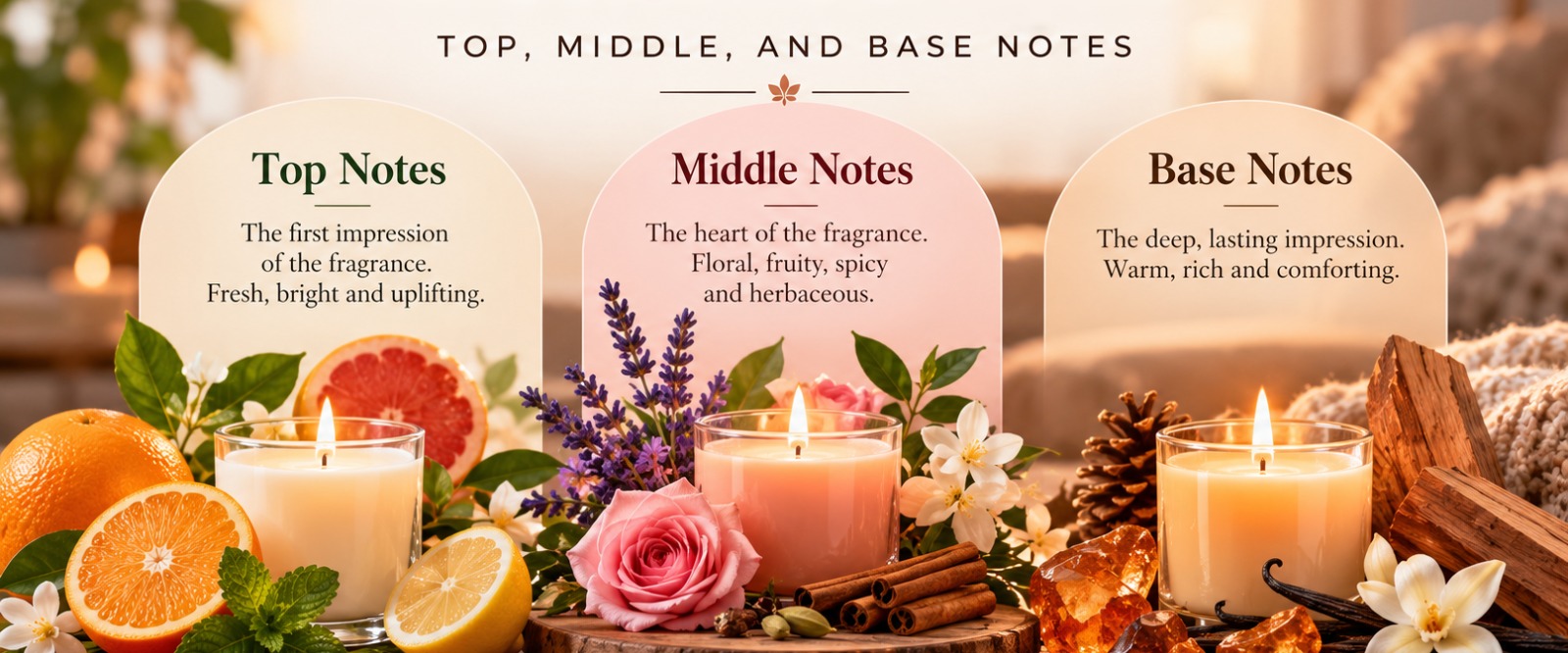
Have you ever noticed a candle fragrance changes as it burns? Maybe you get a refreshing citrusy scent, then some delicate florals or creamy vanilla. Finally you get a deeper woody scent.
This is where things get fun.
Many candles use a 3 layered scent – top notes, middle notes and base notes. These fragrances will create a fresh, comforting, floral or warm scent.
Understanding what each candle scent note means can help you find the perfect candle for your needs – whether that’s a calming evening candle, a thoughtful gift or a candle that makes your home feel more welcoming.
Discover how they work and which candle to pick.
What are candle scent notes?
Candle scent notes are the individual scents used to create the overall fragrance of the candle. Often there are 3 main types of scent notes found within many candle fragrance compositions.
They are the opening scent, the heart of the fragrance and the depth of the fragrance.
Not all candles will follow this format. Some candles are created to have a consistent scent throughout, whilst others will have a more noticeable change in scent. This will also depend on the candle’s fragrance notes, wax, wick, room and burn time.
Understanding the different layers can help you know what to expect.
1) Top Notes
Top notes will often be the first scents you notice. These will often create a fresh, bright and uplifting scent.
Generally top notes will be lighter and more volatile than other deeper scent notes.
Common Top Notes:
Citrus – lemon, orange, grapefruit, bergamot.
Fresh – green leaves, mint, airy.
Light Fruity – certain apple, pear and berry notes.
How do they smell?
The bright citrus and green notes can create a clean and fresh scent. Imagine opening a window on a bright morning or peeling back an orange.
These would appeal to someone who likes a fresh scent, bright kitchen or light scents.
Ideal for: Morning routines, home office, kitchens and anyone who prefers fresh and uplifting scents.
2) Middle Notes
Middle notes (sometimes called heart notes) are the main scent of the fragrance. These often become more noticeable as the candle burns.
They can create a floral, fruity, spicy, herbaceous or comforting scent.
Common Middle Notes:
Floral – rose, jasmine, lavender, geranium.
Herbaceous – rosemary and other aromatic herbs.
Spicy – cinnamon and cardamom.
Fruity – richer fruit notes.
How do they smell?
Imagine a peaceful afternoon with a bouquet of fresh flowers nearby. The soft floral or herbaceous notes can create a balanced, inviting and expressive fragrance.
The lavender can create a gentle and aromatic scent, rose can create a classic floral scent. Spicy notes can create a warm scent.
Ideal for: Living room, reading nook, peaceful evenings and anyone who likes floral, herbaceous or gentle spicy scents.
3) Base Notes
Base notes often create a rich and deep fragrance. There are often heavier and less volatile scent notes within base notes.
They can create a warm scent to the fragrance. Some candles will create a cosy lingering scent thanks to the base notes.
Common Base Notes:
Vanilla – sweet, creamy and comforting.
Sandalwood – smooth, gentle and woody.
Cedarwood – dry, earthy and warm.
Amber Accords – rich, warm and often slightly sweet.
Musk Accords – gentle, smooth and rounded.
How do they smell?
Imagine a cosy evening with a soft blanket, warm lighting and a good book. Vanilla, sandalwood and amber accords can create a comforting atmosphere.
Whilst they are very popular with those who like a richer scent, this doesn’t necessarily mean they will have a stronger scent or burn for longer.
Ideal for: Bedrooms, cosy living areas, evenings and anyone who likes warm, woody and sweet scents.
Top Notes vs Middle Notes vs Base Notes
Below is a quick comparison.
Feature Top Notes Middle Notes Base Notes
Main purpose Opening scent Heart of the fragrance Depth and warmth
Common types Citrus, mint, green Rose, lavender, spices Vanilla, sandalwood, amber
Overall scent Fresh and bright Balanced and expressive Rich and comforting
When noticed Often at the beginning As fragrance develops Often more noticeable later
Sometimes there can be overlapping fragrances.
How do they work together?
A great fragrance will compliment each other.
A balanced fragrance will have a fresh scent with some character and depth.
Here are just a few examples.
Citrus & Vanilla
The bright citrus can create an opening, whilst the creamy vanilla can create a sweet and warm scent. This can create a happy and comforting scent.
Lavender & Sandalwood
The lavender can create an aromatic and herbaceous scent, whilst the sandalwood creates a gentle and woody scent. These can create a calming scent.
Rose & Amber
The rose can create a floral scent whilst the amber accords can create a warm and rich scent. This can appeal to those who like a romantic and elegant scent.
Apple & Cinnamon
Fresh apple notes can create a fruity scent with the cinnamon. This can create a very inviting scent during the cooler months.
This is just an example. The actual scent will depend on the fragrance composition and how much of each ingredient has been used.
How to pick the right candle scent for your home.
Now you understand the different fragrance notes, you can pick the right candle for you. Think about what kind of scent you like.
1) What kind of atmosphere do you want?
If you want to create a fresh and uplifting atmosphere, then look for candles with citrus and/or green notes. If you want a gentle floral scent then try rose or lavender. If you want a warm and comforting atmosphere try candles with vanilla, sandalwood and/or amber accords.
2) Consider the room
A bright citrus scent can work well in the kitchen or during the day in your workspace. Floral and herbaceous scents can work well in your reading nook. Warm and woody scents can work well in your living room or during the evening.
This is just a guideline. It really depends what you like.
3) Seasonal
Often fresh, green and citrus scents can be appealing during the spring and summer months. Rich vanilla, woody and warm spicy scents can be very inviting during the autumn and winter.
You can enjoy any scents throughout the year so just pick what makes you feel comfortable.
4) Read the fragrance description
When buying candles online, don’t just consider the name. Look at what fragrance notes have been used. This will help you know if it’ll be mainly fresh, floral, sweet, woody or spicy.
If you like light scents then look for candles with fresh citrus and gentle florals. If you like richer scents then look for candles with vanilla, woody and amber accords.
5) What scents do you like?
Consider what perfumes, room sprays or other home scents you like. If you love citrus perfumes then you may like candles with bergamot or orange. If you like warm and sweet scents then try candles with vanilla based scents.
Why does the fragrance change?
You may have noticed that a candle has a different fragrance when it’s burning. This is completely normal.
There are various reasons why.
Some aromatic ingredients are more volatile. Heating the wax will release the fragrance. The ingredients will have different levels of fragrance. The room can affect how the fragrance works. And finally, your perception can change depending on how long you’re around the fragrance.
The scent you get when you open the jar is often referred to as the cold throw. The scent when it’s burning is often referred to as the hot throw.
The cold throw of a candle doesn’t always mean it will have a strong hot throw. Sometimes there isn’t clear stages to the fragrance and some candles will have a more consistent scent throughout.
Common Myths
Myth 1: All candles will have 3 clear layers.
This isn’t always the case. Some candles will have a complex fragrance, whilst others will have a simple and consistent scent.
Myth 2: A candle with base notes will burn for longer.
Whilst base notes can create a long lasting scent, it doesn’t mean the candle will burn for longer. This will depend on the amount of wax, wick, candle design and burning conditions.
Myth 3: A candle with a strong scent is better quality.
This isn’t necessarily true. Some people like a strong scent whilst others like a subtle scent. Just pick a candle that works for you.
Myth 4: You need to know all the fragrance notes.
You don’t need to become a fragrance expert. Just know a few common notes and what you like.
FAQs
- What are top, middle and base notes?
Top notes create the opening scent. Middle notes create the heart of the scent. Base notes create depth and warmth. These help create the overall fragrance of the candle.
- Which scents work best for a relaxing atmosphere?
Many people like lavender, gentle florals, sandalwood and mild vanilla scents to create a calming atmosphere. Everyone is different and you shouldn’t rely on a fragrance instead of medical advice.
- Do all scented candles have top, middle and base notes?
No. Whilst many scents will have layers, not all candles will have a clear fragrance pyramid. Some can have a simple or consistent scent.
- Why does my candle smell stronger when it’s burning?
The heat will cause the fragrance to be released from the wax. This can create a stronger scent.
- How can I find a candle fragrance I’ll love?
Find out if you like fresh, floral, fruity, sweet or woody scents. Then look at the description of the candle and see if there are any fragrance notes that match your preferences.
Final Thoughts
Now you understand what top, middle and base notes are, you can now explore more scented candles. The fresh citrus can create a bright atmosphere, the floral middle notes can create some character and the vanilla/woody base notes can create a comforting atmosphere.
You don’t need to know all the fragrance ingredients. Just start with what you naturally like. Think about what atmosphere you want and experiment with different fragrances.
At Dearly Kindled we aim to help you find a candle that creates little moments of warmth, comfort and connection.
Take a look at our range and find a fragrance that makes your space feel a little more like home.